
Nao Santa María visits Drogheda
In July 2026 a full-scale replica of Christopher Columbus's flagship, the Nao Santa María, tied up at Drogheda Port on the River Boyne. Built in Spain in 2018 by the Fundación Nao Victoria, the wooden nao is a floating museum: visitors can walk the decks, go below, and get a feel for life aboard a late fifteenth-century ocean ship.
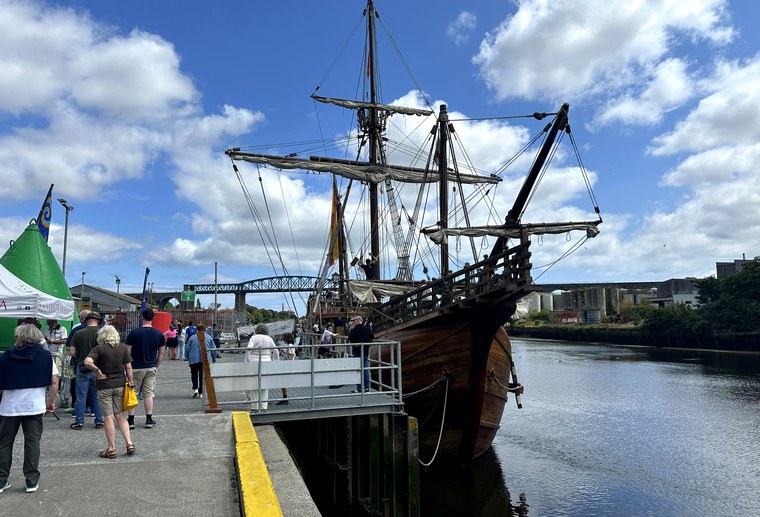 Nao Santa María at Drogheda, with the Boyne Viaduct beyond the masts.
The original Santa María sailed from Huelva in August 1492 with the Niña and the Pinta, and reached the Americas that October. The replica weighs about 200 metric tons, carries five sails with a total area of around 303 square meters (3,260 square feet), and uses roughly three kilometers (nearly two miles) of rope in its standing and running rigging. Modern safety kit sits alongside period fittings, but the look and layout follow historical research into a fifteenth-century nao.
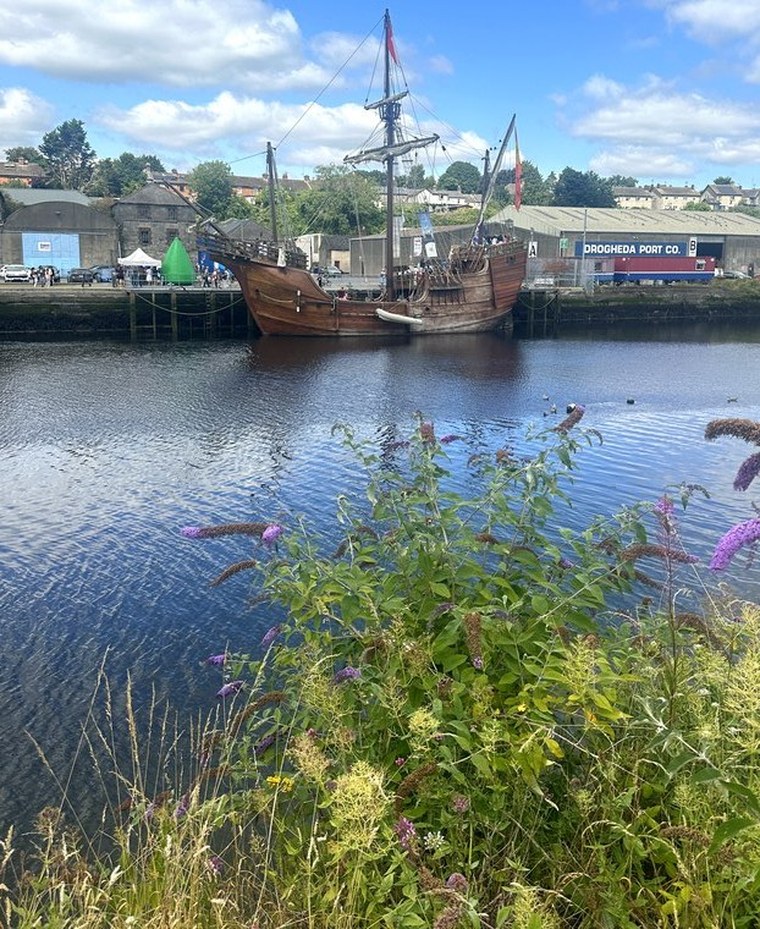 Moored at Drogheda Port, seen from the south bank of the Boyne.
Steering without a wheel
One of the most striking details on board is how the ship is steered. There is no familiar ship's wheel. On deck you find a long wooden stick, known in Spanish as a pinzote and in English as a whipstaff. The helmsman pushes and pulls this lever, and the movement is carried down through the deck to the steering gear below.
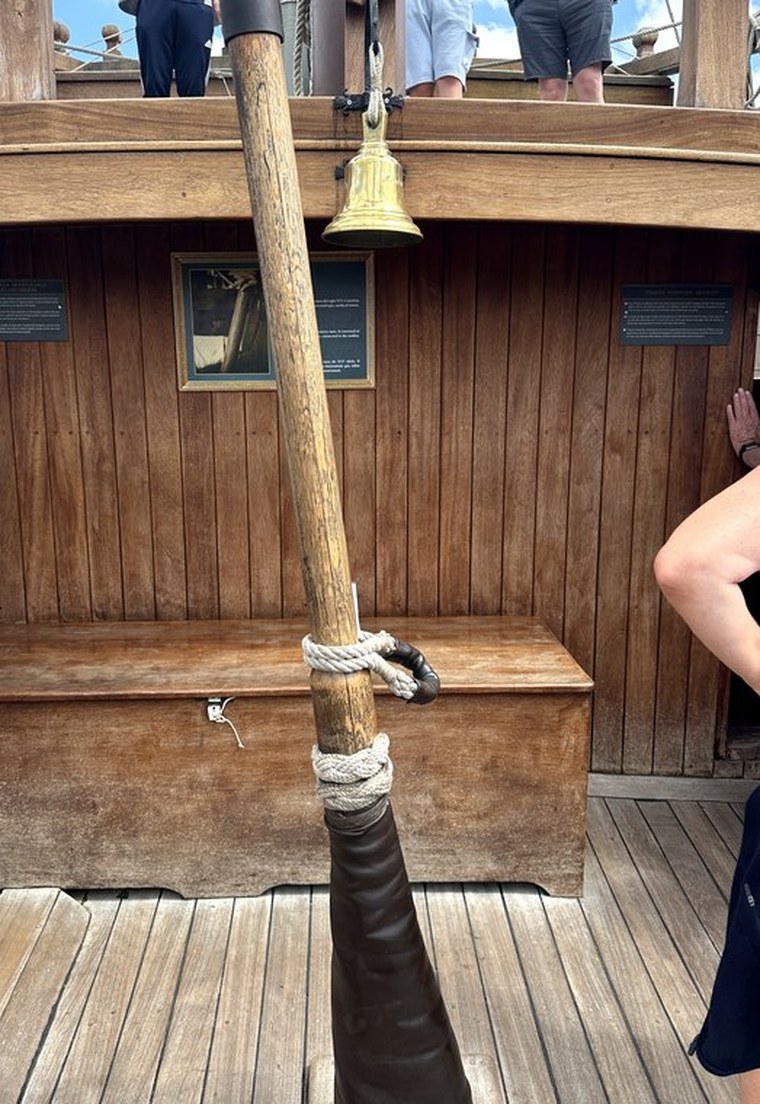 The whipstaff on deck: a stick, not a wheel, sealed where it passes through the planking.
Go below and the story becomes clearer. The lower end of the stick joins a heavy horizontal timber, the tiller. As the whipstaff pivots, that beam swings left or right across the floor. The tiller runs aft toward an opening in the stern, where it connects to the rudder stock. Move the stick one way on deck, and the tiller turns the rudder the other way in the water.
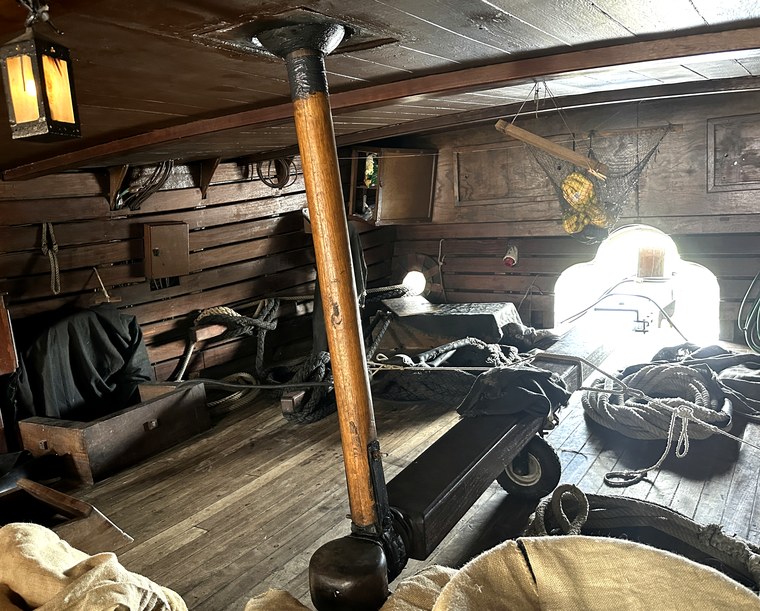 Below deck: the whipstaff meets the tiller, which runs aft toward the rudder.
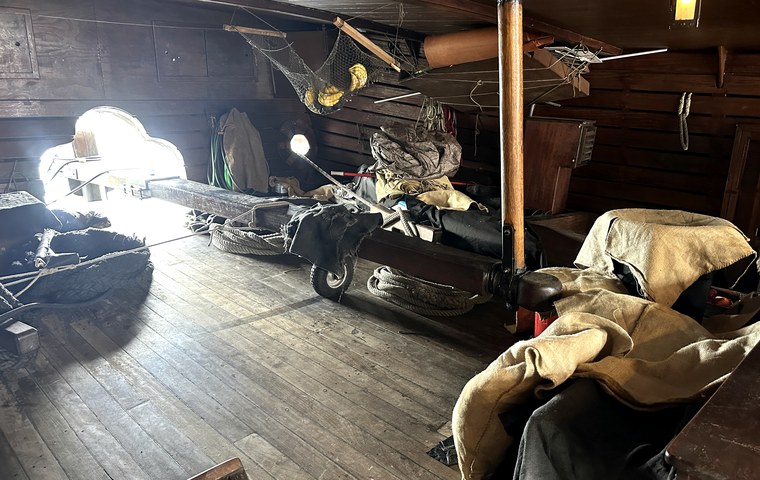 Close-up of the tiller beam that changes the direction of the rudder.
From outside the ship you can see the other end of the system. A large wooden rudder hangs on the stern, hinged to the hull with heavy metal fittings. Above it, a shaped opening in the transom is where the tiller works through to the blade. Deck stick, below-deck tiller, and outer rudder are three parts of one simple machine.
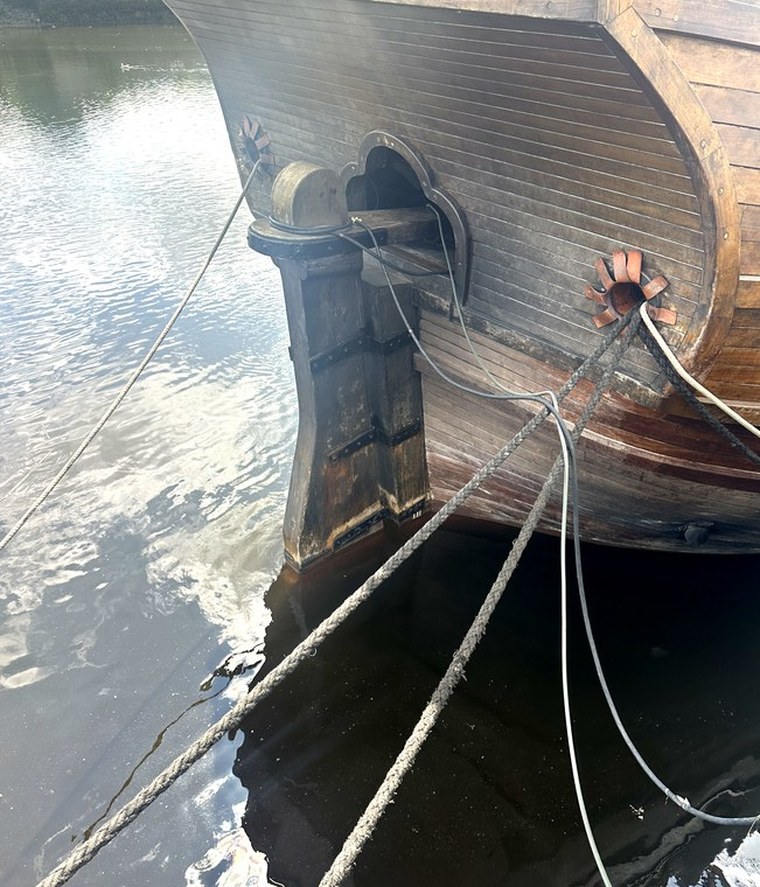 Outside the stern: the rudder, and the opening where the tiller meets it.
For a few midsummer days the nao turned Drogheda's quays into a classroom on Age of Discovery shipbuilding. Standing on the pier with the Boyne Viaduct behind the masts, or leaning over the rail to watch the whipstaff at work, it was easy to see why a floating museum of this kind draws a crowd.
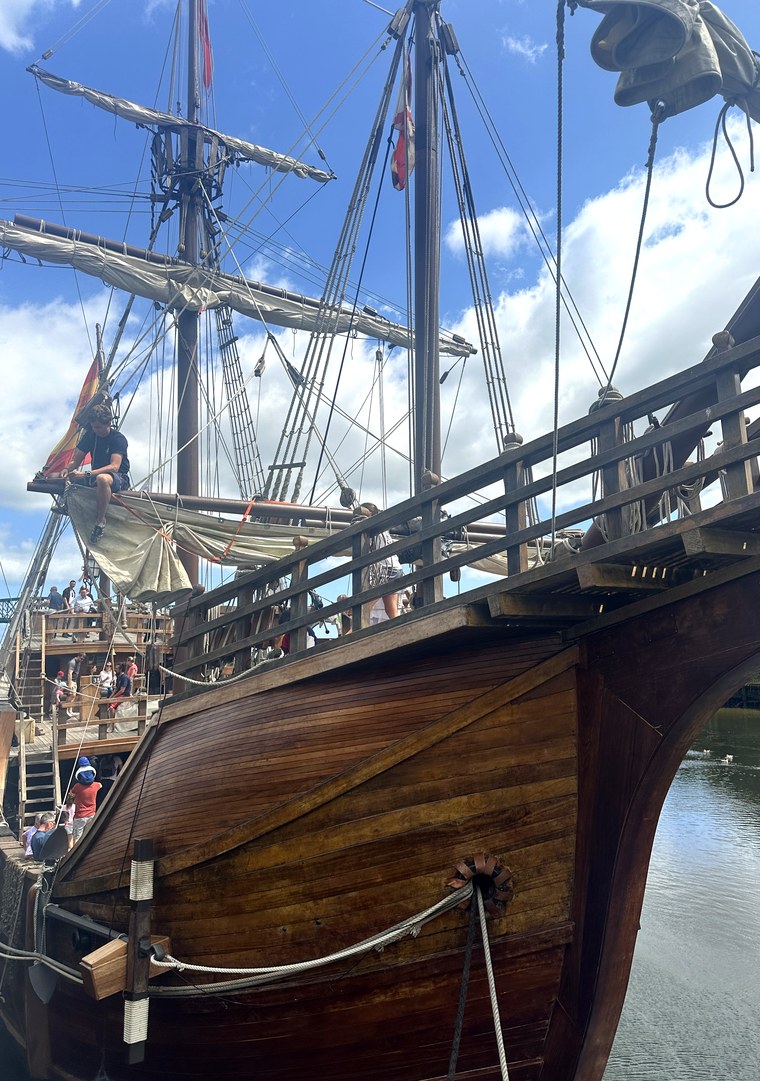 Bow of the Nao Santa María, with the bowsprit projecting forward.
TripAdvisor Review
I took a tour of Boyne Valley with Michael Fox while visiting from the United States as a single traveler. It was a wonderful, well paced day with an excellent guide. Read the full TripAdvisor review